The Bond Behind the Work
The Bond Behind the Work
Most mornings at The Cottage, Charger and I run a few training sets before I sit down to work on the business. My favorite spot is on the screened-in porch. The Cottage is an old Swedish farmhouse on a Minnesota lake. The family has had it for decades. I love the porch. The lake is 20 steps away. I can smell the water. I can hear the loons. Charger lounges on the futon nearby.
But if I stand up, Charger is up. If I turn toward the screen door, she's ready. A guest would think she needs to go out. I know better. There's a ball by the dock, and there's a very good chance I'll throw it.
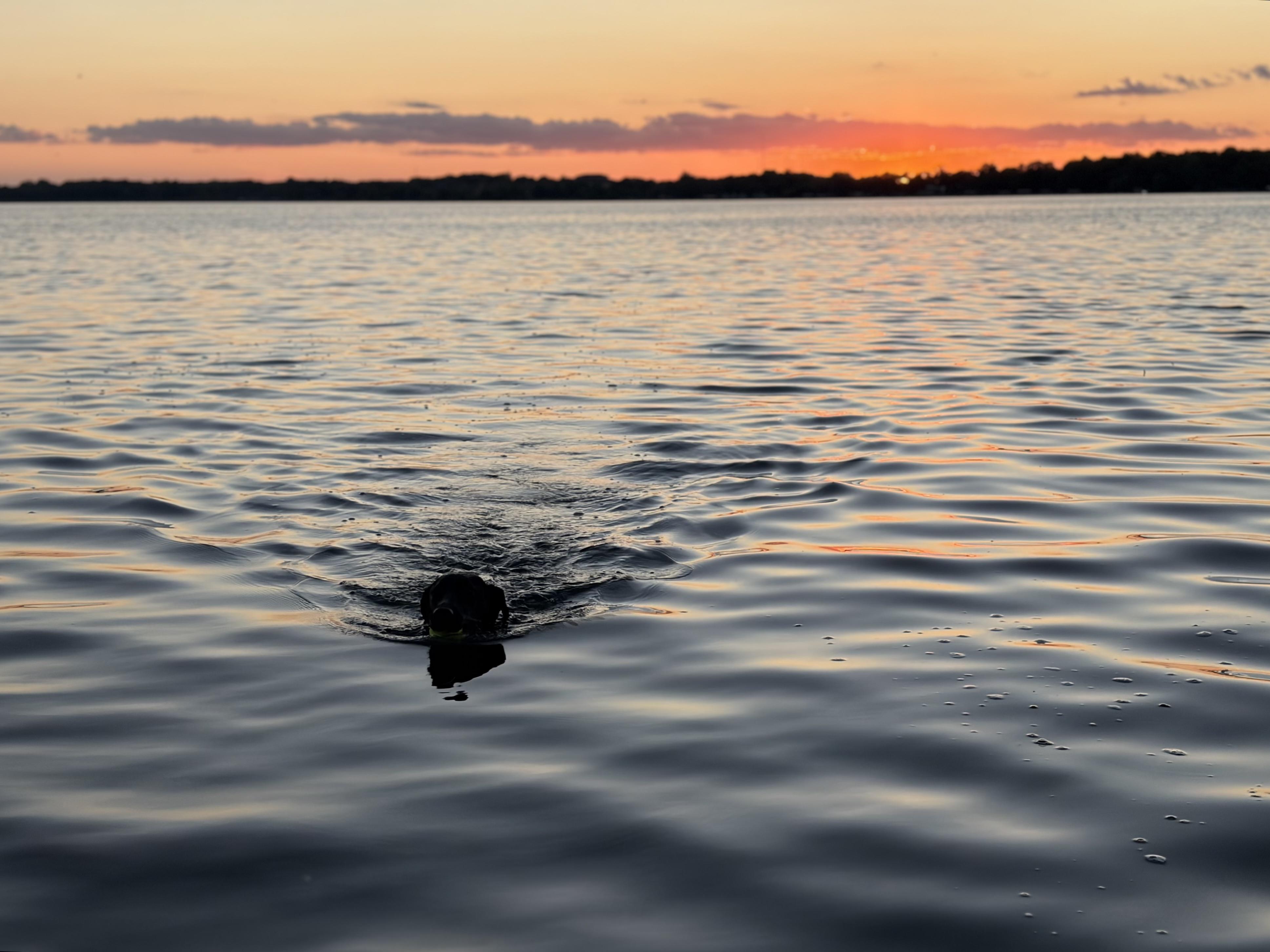
She launches into the lake, swims so hard her shoulders come out of the water. She makes a wake - like a little boat. How can a dog paddle so fast? She brings the ball back and stands there dripping, waiting on the next throw. Sometimes she doesn't even bother to shake. Why waste time when the ball could be flying again?
Charger has taught our guests this game, too. She gets in front of someone on the way to the dock, stops beside her ball - and kinda blocks her guest so they also have to slow down. She looks at her beloved ball, then back at her new friend. Most people catch on. Once they pick it up, she races down the dock and glances back to make sure they're coming. I love watching her pull it all together. She knows what she wants, and she's remarkably good at inviting people into it.
Can I be smarter than the dog?
At breakfast at our favorite local diner (Travelers Inn … delicious), someone brought up Water Dog, Richard Wolters’s old retriever-training book. This is duck-hunting country. It seems like every household with a dog had a copy. For years I’ve heard a saying attributed to Wolters: “If you’re going to train a dog, you first have to be smarter than the dog.” I still haven’t found it in the book. If you know where it came from, tell me!
It makes me laugh, though I get the point. A Handler needs to understand how dogs learn. In detection work, that’s just the start. We need to know how we build and maintain an excellent detection dog, how odor moves in our work environments, and how our own Handler behavior affects the dog. I love it. I take it seriously. I kinda want to know everything about it, LOL, but am I trying to be smarter than Charger? Nope. She can do things I can’t, and I have a job she can’t do. It seems we each know our part and get to know the other well enough to work together. I’ve heard folks call this “the dance” - seems pretty accurate. A happy dance.
I can plan a training set, watch what happens, and decide where we search next. Charger can tell me something about the odor out there that I’d never know on my own. If I’m busy directing every step she takes, I might miss it.
Dog time
Would I spend hours every week throwing a ball off a dock if I didn’t have a Labrador? Probably not. Charger would, though. So we do. And I have to admit her dog joy brings me joy too. It’s awesome.
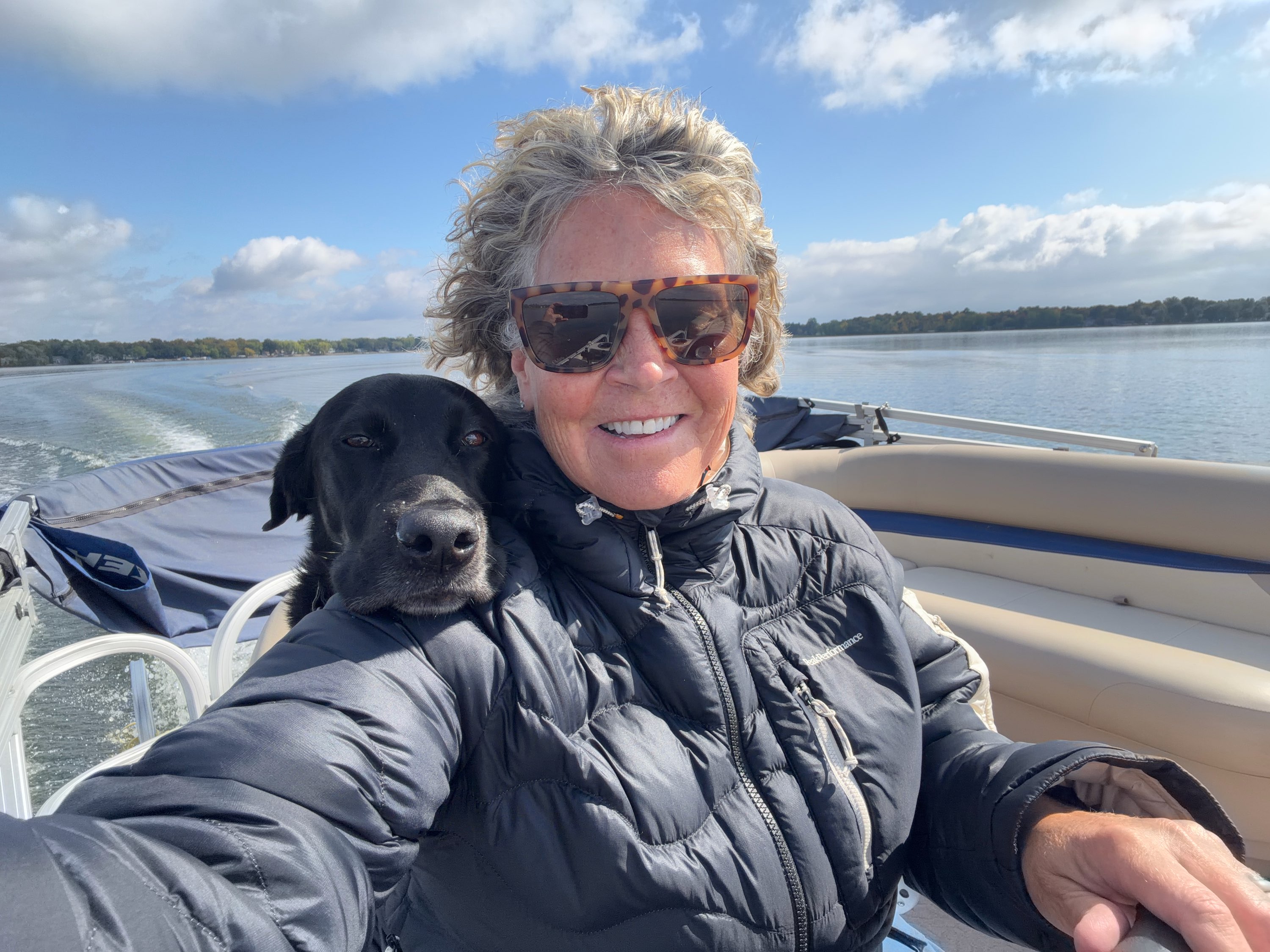
We also have “boat coffee.” After training, I make a cup of delicious black coffee, and we putter around the lake. I talk to her. Of course I talk to my dog. She gets the wind in her whiskers and sometimes settles right behind me in the captain’s chair. She’s not much of a cuddler, which makes that closeness feel pretty special. We take a wee nosey around the lake, coffee in my mug and a great dog literally by my side—nothing to accomplish. For an hour or so, it’s the pinnacle of greatness.
If I pick up my phone and start scrolling, she often moves away. I don’t know what she thinks about the phone. I do know I’ve stopped paying attention to her, and the moment changes. Boat coffee is better when I put the phone down.
That’s dog time to me. At the dock, I can see she wants the chase, the swim, and another throw. On the boat, she chooses to settle in close. Another dog might want a long sniff through the woods or a game I’d never think up. I’d have to spend time with that dog to find out.
The dog who comes to work
Charger brings all that dogness into the field. Training has made her a pretty good detection dog, ready every time I ask. But she isn't a computer. She's the same dog who organizes a game at the dock, settles in beside me for boat coffee, and knows the instant I'm headed somewhere interesting. What might I miss in the field if I stop paying attention to the animal doing the detecting?
I love learning those things about her. They don't all tell me how she'll search. They remind me to work with the dog I have in front of me. She pays close attention to me, even though she's an independent worker. I owe her that same attention. Intentional attention.
Our jobs in the field are related, but they aren't identical. Mine includes understanding the assignment, choosing where and how we search, watching the conditions, keeping us safe, and accurately reporting what happened. Charger's is to use her nose and show me what she finds. I need to stay out of her way and allow her to convince me she’s found what pays. I also need to know when to offer direction and when to get out of her way.
The time we spend together makes that easier. I learn what she finds interesting, what she chooses when she has a choice, and what she looks like when she's having the time of her life. She learns me, too. We build a way of working together that doesn't require me to think through every tiny step while I'm following her. Maybe that's the flow I'm always hoping to find behind my dog: the preparation is there, and we can go to work.
Find out what matters to your dog
If I were looking for a first step toward a stronger working relationship, I'd start by finding out what the dog thinks is valuable. Really find out. Not just pick a reward because it looks great to me.
For Charger, tugging with me can be the greatest thing in dog world. Sometimes having the toy to herself is better for that moment. Sometimes a small piece of food is just right. The biggest reward isn't always the most useful one. If she gets too wound up, I need to help her come back to a place where she can think and work. Those choices have taught me as much about Charger as they've taught me about rewards.
I want to be good company in her world. I want her to enjoy the things we do together, including the work. That doesn't mean I need to stick my nose into every decision she makes. It means knowing her well enough to support her, pay her in a way that matters to her, and notice when she needs something different from me.
“How to create a bond with your dog.” Go read the lists. Good trainers have thoughtful ideas about building a bond with your dog, and I've learned from them. What I want with Charger is something I'd call a flow-level bond: we know our jobs, know each other, and move through the work together without my having to think through every little step. Is that the best kind of bond? I don't know. I know I want it. It’s always what I’m “looking for” when I’m out in the field. I suspect we can build it, one dock retrieve, boat ride, and search at a time.
When do you and your dog feel most in sync, and what have you done together to get there?
Here’s to the dogs who keep us honest, and the questions that keep us learning.
Janie
