
Our Blog - The Handler’s Journal
Our blogs are here to spark curiosity, share expertise, and keep you inspired on your journey as a Handler. We write to connect science, strategy, and real-world experience, offering insights and practical tips that help you and your dog thrive in detection training. Whether you're building foundations or refining advanced skills, our blogs are your guide to purposeful, intentional progress.
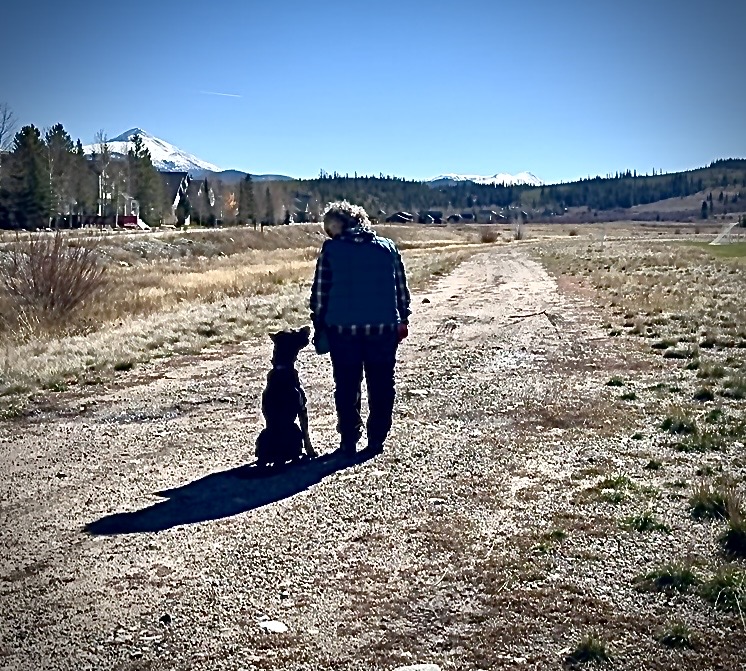
Are Love and Passion Enough?
Are Love and Passion Enough?

There’s a lot of talk about love this time of year.
Romantic love. Big love. Passion. Devotion. The kind that feels bright, charged, and full of possibility.
But I keep returning to a quieter question:
Are love and passion enough?
From what I’ve observed over time, I don’t think they usually are.
Love and passion can carry us far—but without grounding, without learning, without connection beyond ourselves, they tend to ask too much. That bright flame, once full of potential, can burn fast. It fizzles. And when it does, the loss isn’t just emotional—it’s directional. Energy that could have grown into something durable simply dissipates.
The Pattern I Keep Seeing
In the work I do—across the many forms of human remains detection with dogs—I’ve seen this pattern repeat.
Good people arrive with open hearts and genuine excitement. They want to do something meaningful. They want to work alongside their dogs. They want to belong to work that feels important.
And then they run into friction.
Not because they lack care—but because they’re navigating challenges they didn’t know how to anticipate:
Gaps in understanding how animals actually learn
Difficulty inside mentorships or group dynamics
Limited access to learning environments that support growth without pressure
So the story tightens around love.
“I’m going to train this rescue husky for detection—she’s a good girl. She loves the snow. She loves to work.”
Sometimes that’s true.
Sometimes… maybe it isn’t.
Love can make us loyal to an idea longer than the idea serves the dog.
Love can make it hard to see what’s being asked—and who it’s really for.
Not every basketball-loving kid ends up in the NBA. Not every dog belongs on the front lines of detection work. Both paths tend to require a particular mix—natural promise, opportunity, guidance, and support.
And the same is true for the human.
Years of Watching Things Fade
Before settling into Archaeology Human Remains Detection—a field I value for its depth, history, and long view—I worked across many parts of Search and Rescue K9.
Along the way, I noticed something that stayed with me.
A lot of quiet fading.
People whose early enthusiasm slowly gave way to frustration.
People who didn’t know what they didn’t know.
People who might have chosen differently if they’d understood the road ahead.
Often, they weren’t wrong to care.
They just didn’t have guidance, shared language, or a place to work through the learning curve.
There’s a steady influx of passionate, well-intentioned people into a landscape that hasn’t always been built to support learning over time. That observation—more than any single moment—is part of why I created Dog Merickel. (Yes, I still smile at calling it “Dog.”)
I wanted a place I wish I’d had earlier.
A place I wish existed.
A place where curiosity could breathe.
Where learning didn’t require posturing.
Where care for the work didn’t have to turn into self-exhaustion.
This Question Isn’t New
What’s interesting is how old this question really is.
Humans have been writing about love, devotion, and endurance for centuries. Across cultures and eras, the same theme keeps surfacing: passion opens the door, but sustained work requires intention and community.
Some writers, like Epictetus, warned that loving without accepting limits leads to clinging and fear. Others, like Seneca and Marcus Aurelius, described love as something quieter—an act of character, a way of showing up when emotion fluctuates, a practice rather than a feeling. I’ll admit it—I love reading the Stoics, not as doctrine, but as steady companions for thinking about responsibility, limits, and how to stay oriented over time.
Aristotle—not a Stoic, I know—described lasting love as grounded in friendship, shared purpose, and time. It’s an enduring philosophy many people still recognize: love isn’t just something you experience—it’s something you participate in.
More recent thinkers echoed that same idea: love isn’t something you fall into and coast on. It’s something you stand inside deliberately, with responsibility and care. It falters when it replaces purpose instead of walking alongside it.
Different voices.
A familiar through-line.
A Simple Through-Line I Keep Coming Back To
When I strip all of this down to what I’ve lived and observed, it tends to look like this:
Passion opens the door
Love deepens the bond
Structure keeps it livable
Character keeps it ethical
Shared direction keeps it moving
Luck still gets a vote
Or, more simply:
Love without wisdom wears people out.
Love with intention has a chance to last.
Why I Built This Space
When I look honestly at all that fading—
the stalled teams, the quiet disappointment, the burnout that never quite gets named—it’s rarely because people didn’t care.
It’s because caring alone isn’t sustainable.
Love opens the door.
But without structure, learning, and shared direction, it can quietly become too much for one person to carry.
That’s the space I’ve spent years standing inside.
Not a failure in the work—but a place where support and shared understanding haven’t always been easy to find.
So I created one.
Dog Merickel, and the Society For Dogs, exist as a protected thinking environment. A place where people who take this work seriously can slow down enough to learn—together. Where questions don’t have to arrive polished. Where curiosity can come before confidence.
This work also depends on community care—an important cousin to self-care. Not something abstract, but the shared responsibility of creating conditions where people can keep learning, reflecting, and staying engaged over time. Psychological safety isn’t assumed here; it’s something we actively look after.
This isn’t about overturning science—we honor it.
And it isn’t about claiming authority or final answers.
It’s about asking better questions, staying thoughtful, and improving how we work over time.
It’s about direction—how we orient ourselves and make decisions as the work unfolds.
This work—human remains detection, archaeology, field deployment, partnership with dogs—lives inside complexity. Many things are well understood, and there is always more to learn. What matters is how we think, how we learn, and how we stay oriented over time.
I’ve found that progress grows more steadily through Community—people doing the work, sharing perspective, and building understanding together, one step at a time.
That belief shapes everything here.
I’m here to help committed Handlers learn together and understand their dogs—and the work they’re doing—more clearly.
My role is to create space where humans can collaborate and learn in more meaningful ways.
To trade going through the motions for intentional understanding.
To choose presence over armor.
To hold responsibility and curiosity side by side.
That’s why love and passion alone were never going to be enough for me.
What keeps this work livable over time are intention, care, shared learning, and a willingness to stay engaged when the work asks something new of us.
If that resonates—
if you’re looking for a place where you don’t have to rush, perform, or prove—
this is the work we’re doing here.
And it’s work I’ll keep showing up for.
Steady. Honest. Together.
Go be great. And if you need a thought partner along the way, I’m here.

Frequently Asked Questions
GENERAL QUESTIONS
What is Dog Merickel?
Dog Merickel is a science-driven platform dedicated to advancing detection dog training through expert guidance, innovative tools, and a strong Community of Handlers.
Who is Dog Merickel for?
We support detection dog Handlers at all levels—whether you’re just starting out or refining advanced skills in Human Remains Detection (HRD) or Archaeology Human Remains Detection (AHRD).
What makes Dog Merickel different?
We combine cutting-edge science, structured training strategies, and a supportive online Community to ensure you and your dog reach the highest level of success.
The Society For Dogs
What is The Society For Dogs?
The Society For Dogs is our exclusive membership-based Community where Handlers can connect, learn, and grow together. We host weekly Coffee Chats, provide structured training discussions, and offer expert insights.
How do I join The Society For Dogs?
You can become a member by signing up on our website. Elite Memberships are currently $25 per month, but the price will increase soon!
What do I get as a member?
Access to our private online Community
Weekly live training discussions via Zoom
Structured training support and expert insights
Exclusive training resources and tools
Training and Courses
What is OdorQuest?
OdorQuest is our structured training program designed to take Handlers through progressive, science-backed detection training, helping teams build strong skills from foundational to advanced levels.
Can I buy training plans without joining The Society For Dogs?
Yes! We offer one-time training plans like Odor Origins that you can purchase individually. However, joining The Society gives you ongoing support, deeper insights, and access to live discussions.
Business & Logistics
Is Dog Merickel a nonprofit?
We are in the process of setting up a 501(c)(3) nonprofit called the Detection Dog Foundation, which will serve as the fundraising arm for scholarships and educational opportunities.
Do you offer in-person training?
We don’t provide hands-on field training, but we do guide Handlers in preparing for it. We also share insights on where to find the best field trainers and workshops.
Can I teach a course through Dog Merickel?
Yes! Our upcoming OdorQuest Academy will allow experienced Handlers to create and teach virtual classes, earning revenue while contributing to the growth of the detection dog Community.
Get in touch with us
Got questions? Fired up about training? Just want to talk dogs? We’re here for it.
At Dog Merickel, we don’t do cookie-cutter solutions—we craft strategies that work for YOU and your detection dog. Whether you're curious about The Society For Dogs, need a solid training plan, or just want to chat about the latest science in detection training, we’re all ears (and so are our dogs).
Email: [email protected]
- Monday - Friday, 8:00 am - 5:00 pm
Join the Conversation: The real magic happens inside The Society For Dogs—grab your spot here!
Drop us a message, and let’s make things happen.
Follow Us
Follow Us
Every sniff has a purpose. Every step has a strategy. Dog Merickel – Where Handlers and dogs crush goals together.
Services
More
© Copyright 2026 Dog Merickel. All rights reserved.