Welcome to Dog Merickel
Empowering Detection Teams Through Science and Community
Why We Do This
Because HRD Handlers deserve better—better tools, a better Community, and better ways to learn and grow. We understand how isolating and costly this work can be, but we also know how deeply rewarding it is when we get it right.
That’s why we pour our passion into creating science-driven tools, ThinkTank-style collaborations, and a space where we rise together.
This isn’t just training—it’s a calling.
This work found us, and we’re here to honor it. Fueled by a love of learning, an obsession with dogs, and a belief in the power of connection, we’re building a movement where Handlers and their dogs push boundaries, redefine success, and achieve greatness.
Driven by Science, Guided by Dogs
Empowering HRD Handlers and their dogs to achieve excellence
At Dog Merickel, our mission is to elevate detection teams worldwide through science-driven tools, personalized coaching, and a supportive community.
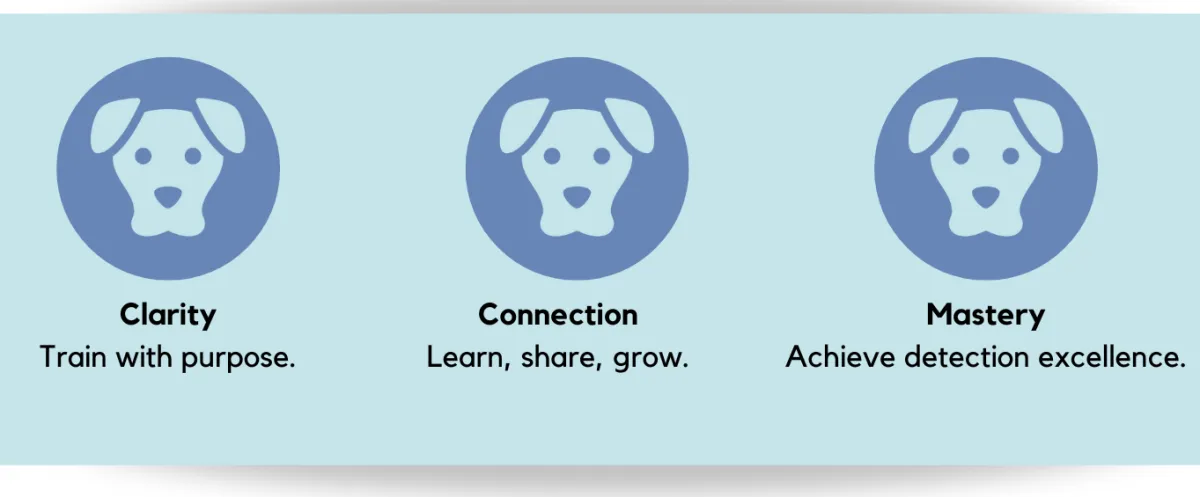
Our Services
Unlock your dog’s full potential with science-driven training. From expert-led community discussions to step-by-step detection plans, our services provide the tools, strategies, and support to elevate your training and achieve real-world results.

The Society For Dogs
The Society For Dogs
Join the ultimate think tank for detection dog Handlers. The Society For Dogs is where science, strategy, and community collide—giving you the tools, discussions, and expert insights to elevate your team’s success.
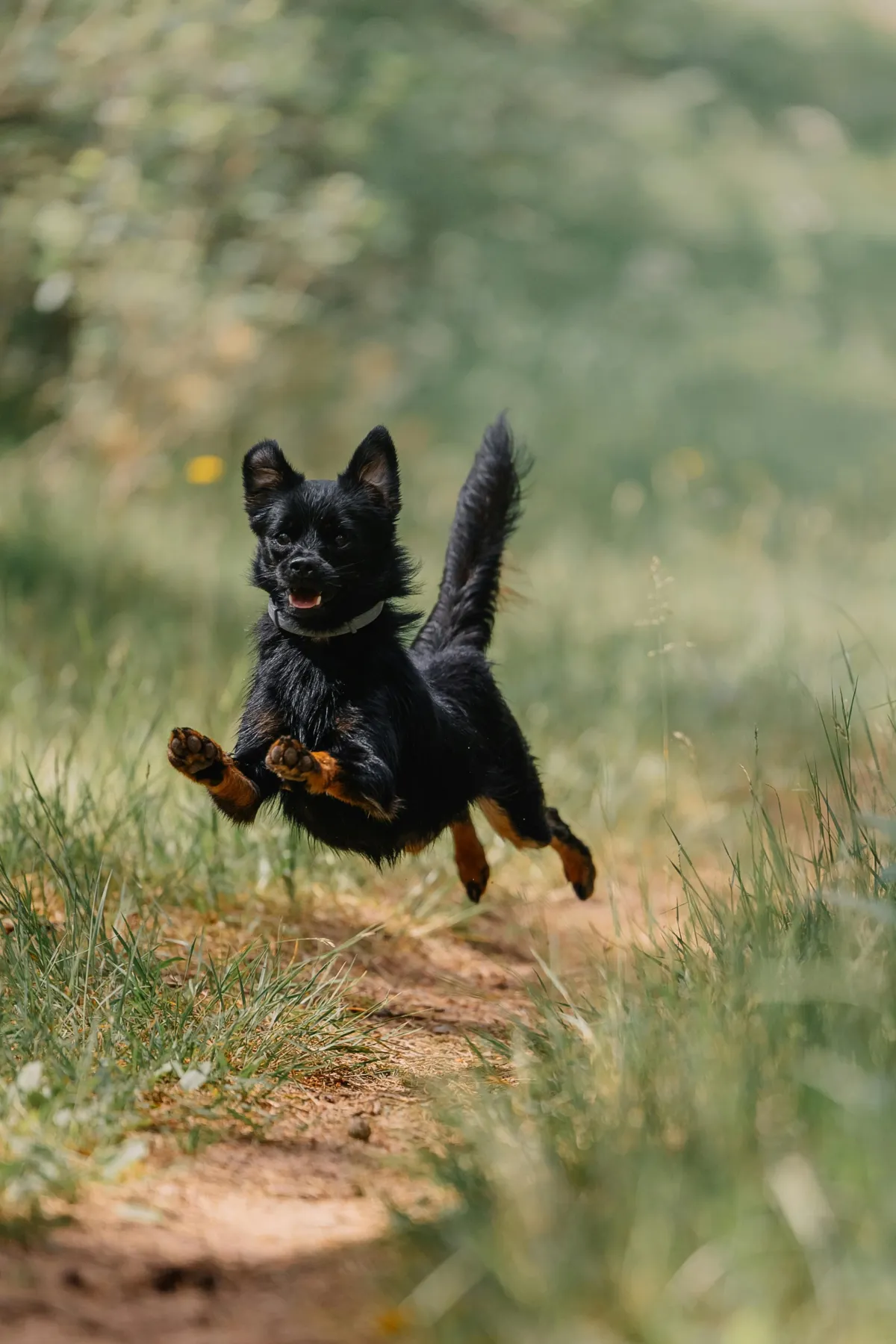
OdorQuest
OdorQuest
Master the art of detection with science-driven training. OdorQuest isn’t just a program—it’s your step-by-step path to building a confident, reliable detection dog through proven techniques and intentional training.

Training Plans
Training Plans
Level up your training—one plan at a time. Designed for real-world results, these bite-sized, expert-crafted training plans (starting with Odor Origins and soon, Focused Detection) give you a clear, actionable roadmap to detection dog success.
Our Goals
At Dog Merickel, our goals define us:
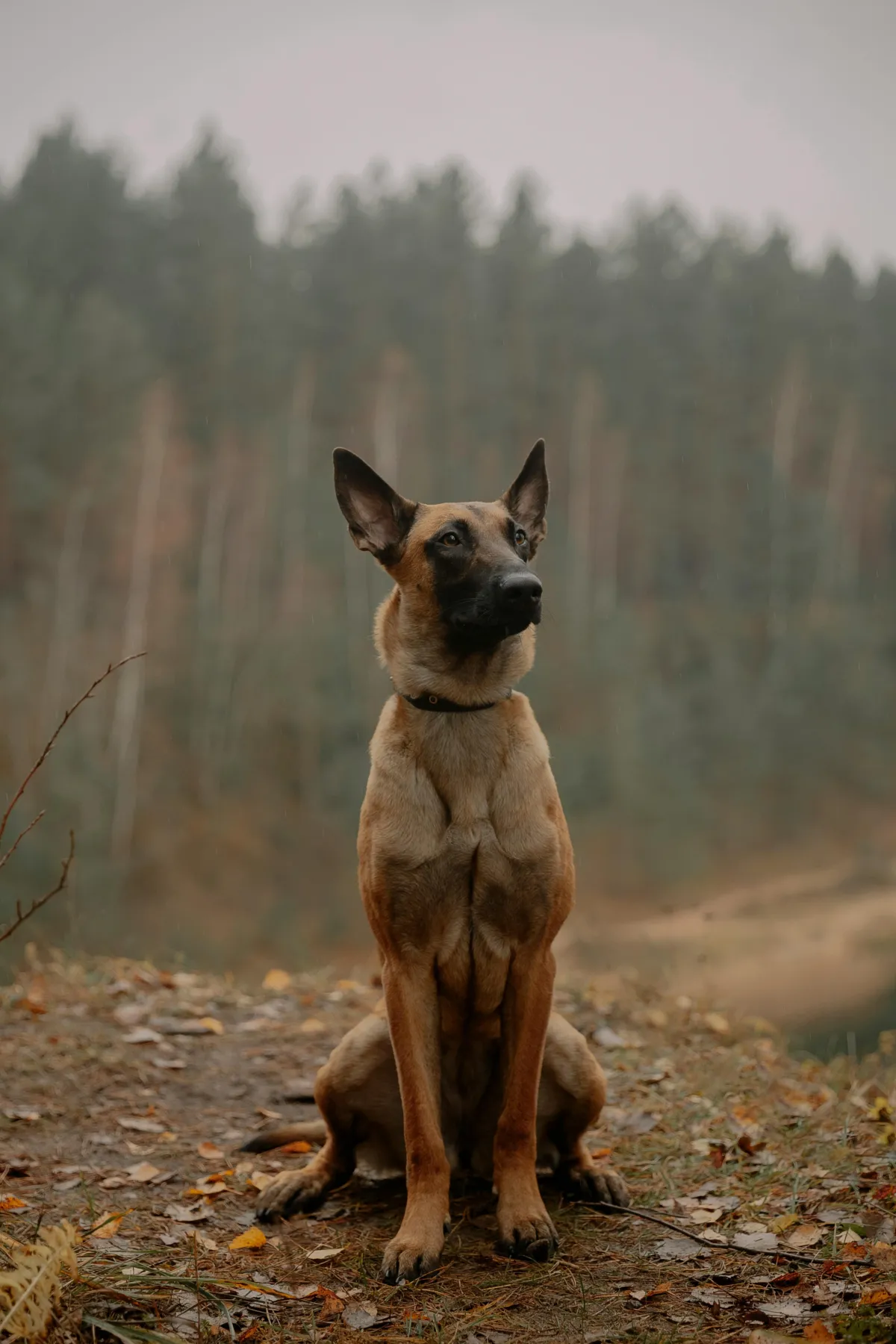
Deliver Better Tools: Innovative, accessible, and effective training plans designed to help you and your dog reach new heights.
Build a Thriving Community: A connected space for Handlers to share, learn, and grow together.
Unleash Potential: Push boundaries, set new standards, and achieve greatness through structured training and support.
Ready to Join the Movement?
At Dog Merickel, we don’t just train dogs—we create partnerships rooted in trust, communication, and excellence.
Explore our programs, connect with our Community, and take the next step in your HRD journey.
Our Promise
Our promise? To bring you sharp tools, smart strategies, and a Community that’s got your back. We work to transform Handlers and their dogs into unstoppable teams.
The Handler's Journal Blog

Why I Started Videoing Our Work
Why I Started Videoing Our Work
(and why I think serious Handlers should)

I started videoing our work because experience alone wasn’t enough. I wanted a way to see the work more clearly than memory allows.
Detection work lives in a strange space. From the outside, it can look slow - just walking, stopping, waiting. On the inside, it’s dense with decision-making. We’re interpreting behavior, revising what we think is happening, managing environmental variables, and checking our own assumptions in real time.
Even when the field looks quiet, the thinking isn’t.
Video gave me a way to return to the work after the field - when my body is calmer, my confidence isn’t steering the narrative, and I’m better able to ask one essential question:
What actually happened?
Not what I remember.
Not what I expected.
Not what I felt certain about in the moment.
What actually happened.
That difference often marks a missed opportunity—one we don’t always realize is there.
How We Actually Video in the Field (Nothing Fancy)
This doesn’t require special equipment or a production mindset. Most days, it’s just my phone - an iPhone leaned against a tire, propped on a rock, or set into a tuft of wild grass. Sometimes it’s a small, inexpensive tripod that lives in the truck until I remember to grab it. Those flexible-leg tripods are light, cheap, and effective.
Lately, I’ve also been paying attention to video glasses. Several colleagues use them, and the footage is revealing. Seeing exactly what the handler saw - where attention went, when timing shifted, how decisions were made—adds a layer that third-person video simply can’t capture.
There are also action cameras - GoPros and similar tools - clipped to a pack, chest-mounted, or handheld. Durable, weather-friendly, and reliable when conditions are rough.
The gear isn’t the point.
The habit is.
Pick one method. Make it routine. Let imperfect video exist.
The Three Reasons Video Actually Matters
There are plenty of reasons people give for videoing their work, and I have a lot of reasons - kinda depends on what I’m working on - but here are three of my top reasons - the ones that have most directly improved how I train, interpret, and make decisions.
1. Bias: Get a Grip on What’s Really Running Your Thinking
I observe that until folks understand how strong bias is in their lives, this one is hard - but what if bias isn’t a failure but a normal part of being human? I think we should let ourselves be humans and realize bias is a part of how we work.
So yeah, every Handler has bias. Experience doesn’t remove it; sometimes it just hides it better. We all carry expectations, preferences, habits, and internal narratives about what we think we’re seeing. Those narratives shape interpretation long before we’re aware of them.
Video has a way of exposing that, of allowing us to see what bias it lurking - and you know what they (Brene Brown) says about shame … once it’s in the light of day, it’s less able to control you.
When you sit down with the footage - on your own, or better yet with a trusted colleague - you start to notice things that were easy to miss in the field:
where you expected something to happen
where you really stuck to an early change of behavior (maybe when you should not have?)
where interpretation filled in gaps the dog hadn’t actually filled
These things are examples of classic confirmation bias: noticing and remembering information that supports what you already believe, while discounting what doesn’t quite fit.
If bias is influencing your decisions - and it is—pretending it isn’t there doesn’t help. What helps is seeing it, naming it, and developing ways to work around it.
If bias is part of the system, you might as well know where it lives.
Video doesn’t eliminate bias.
It helps you see where it’s operating.
And seeing it clearly is what makes re-thinking possible.
2. Identifying Training Holes (This Is the Big One)
Honestly?
This is probably the single biggest reason to video your work.
Training holes don’t usually show up as obvious problems in the field, but show up in patterns over time. For example, how a dog TFRs, how changes of behavior develop (or don’t), how long it takes the dog to resolve difficult odor pictures, and how much support the dog continues to seek from the handler.
Video lets you see that without memory, confidence, or outcome distorting the picture.
When you watch the video - your dog and yourself included - you can ask better questions:
What information did the dog actually have access to in this moment?
What did my position, timing, or movement add - or remove - from that information?
Where did the dog show commitment, hesitation, or uncertainty - and what preceded it?
What did I interpret immediately that might have needed more time to develop?
The dog shows us their level of understanding all the time.
Video just gives us a way to see it honestly.
What we remember is often skewed—by relief, by confidence, by how the day ended. Video keeps the feedback loop clean. And clean feedback is how training actually improves.
3. Decision-Making: Refining Judgment, Not Chasing Outcomes
Another reason I value video is about decision-making.
Detection work is full of small, consequential choices:
when to keep going
when to pause
when to re-approach
when to stop
In the moment, these decisions feel intuitive. On video, you can see how they were shaped - by dog behavior, environmental context, your own positioning, and your timing.
That perspective matters because excellence isn’t about having instincts.
It’s about refining them.
When you review video, you start to see:
where you stepped in too early
where you waited and let information develop
where the dog was ready—or not
That kind of reflection builds judgment you can trust.
Not louder judgment.
Better judgment.
How to Actually Watch Video (So It Helps)
Video only helps if you watch it well.
The first pass should be quiet. No narration. No explaining. No defending. Just observe:
what the dog does
when behavior changes
what stays consistent
where nothing happens
The second pass is best done with a colleague you trust - someone who understands the work and isn’t invested in being right. Let them describe what they see before you explain what you thought was happening. You’ll learn quickly where your assumptions tend to show up.
Only after that does it make sense to bring in structure.
Frameworks, like Steve White’s Eight Signs of Odor Detection (Here’s the video, called Thousand Hour Eyes https://youtu.be/btiOlqq0ETM?si=CWeei6SLNrY3cIWt) - can be incredibly useful when they’re applied after careful observation. Used this way, they help organize what you’ve already seen, keep the conversation grounded, and give everyone a shared reference point.
But if structure comes in too early, it starts functioning like a cue.
Instead of letting behavior develop, we begin matching what we see to what we expect. We start hunting for signs rather than watching the dog. That’s how interpretation gets pulled ahead of information.
Structure should help clarify behavior - not steer it.
Why This Matters in Archaeological Work
When we work on archaeological projects, detection dogs are part of a larger effort to understand a site responsibly. Their role is to contribute information that helps inform interpretation.
That makes interpretation especially important.
In many cases, we video TFR responses not just for our own review, but as part of the project record - for archaeologists, agencies, and other stakeholders. Video allows the dog’s contribution to be seen, revisited, and discussed within shared context, rather than relying solely on memory or description.
That transparency matters.
It supports careful decision-making, keeps conversations grounded in observable behavior, and allows interpretation to evolve as understanding deepens. Video helps remove ego from the process - not by proving anything, but by keeping the focus on what the dog actually offered.
That’s how detection dogs function as a meaningful resource in archaeological work: by contributing clear, reviewable information that supports responsible interpretation of the past.
Why I’ll Keep Doing This
I’m not interested in being comfortable.
I’m interested in being excellent.
Video challenges my assumptions. It exposes my bias - and the moments when I’m being weird. It shows me where my dog is strong and where my training still needs work. It keeps me honest in a way memory alone never will.
Sometimes video confirms what I thought. Sometimes it humbles me. Both are useful.
Both move the work forward.
I’ve learned that in this work - handling dogs, partnering with them, and contributing to responsible projects - studying myself has become just as important as paying attention to the dog, the environment, and the work itself.
Video helps me do that.
That’s why I’ll keep using video - not just as documentation when the work requires it, but as a way to keep learning honestly. If you decide to use it too, I suspect you’ll notice things you didn’t expect and learn things you wouldn’t have seen otherwise. That’s often where the good work begins.
Go be great. And if you need a thought partner along the way, I’m here.

Frequently Asked Questions
GENERAL QUESTIONS
What is Dog Merickel?
Dog Merickel is a science-driven platform dedicated to advancing detection dog training through expert guidance, innovative tools, and a strong Community of Handlers.
Who is Dog Merickel for?
We support detection dog Handlers at all levels—whether you’re just starting out or refining advanced skills in Human Remains Detection (HRD) or Archaeology Human Remains Detection (AHRD).
What makes Dog Merickel different?
We combine cutting-edge science, structured training strategies, and a supportive online Community to ensure you and your dog reach the highest level of success.
The Society For Dogs
What is The Society For Dogs?
The Society For Dogs is our exclusive membership-based Community where Handlers can connect, learn, and grow together. We host weekly Coffee Chats, provide structured training discussions, and offer expert insights.
How do I join The Society For Dogs?
You can become a member by signing up on our website. Elite Memberships are currently $25 per month, but the price will increase soon!
What do I get as a member?
Access to our private online Community
Weekly live training discussions via Zoom
Structured training support and expert insights
Exclusive training resources and tools
Training and Courses
What is OdorQuest?
OdorQuest is our structured training program designed to take Handlers through progressive, science-backed detection training, helping teams build strong skills from foundational to advanced levels.
Can I buy training plans without joining The Society For Dogs?
Yes! We offer one-time training plans like Odor Origins that you can purchase individually. However, joining The Society gives you ongoing support, deeper insights, and access to live discussions.
Business & Logistics
Is Dog Merickel a nonprofit?
We are in the process of setting up a 501(c)(3) nonprofit called the Detection Dog Foundation, which will serve as the fundraising arm for scholarships and educational opportunities.
Do you offer in-person training?
We don’t provide hands-on field training, but we do guide Handlers in preparing for it. We also share insights on where to find the best field trainers and workshops.
Can I teach a course through Dog Merickel?
Yes! Our upcoming OdorQuest Academy will allow experienced Handlers to create and teach virtual classes, earning revenue while contributing to the growth of the detection dog Community.
Get in touch with us
Got questions? Fired up about training? Just want to talk dogs? We’re here for it.
At Dog Merickel, we don’t do cookie-cutter solutions—we craft strategies that work for YOU and your detection dog. Whether you're curious about The Society For Dogs, need a solid training plan, or just want to chat about the latest science in detection training, we’re all ears (and so are our dogs).
Email: [email protected]
- Monday - Friday, 8:00 am - 5:00 pm
Join the Conversation: The real magic happens inside The Society For Dogs—grab your spot here!
Drop us a message, and let’s make things happen.
Follow Us
Follow Us
Every sniff has a purpose. Every step has a strategy. Dog Merickel – Where Handlers and dogs crush goals together.
Services
More
© Copyright 2026 Dog Merickel. All rights reserved.