Welcome to Dog Merickel
Empowering Detection Teams Through Science and Community
Why We Do This
Because HRD Handlers deserve better—better tools, a better Community, and better ways to learn and grow. We understand how isolating and costly this work can be, but we also know how deeply rewarding it is when we get it right.
That’s why we pour our passion into creating science-driven tools, ThinkTank-style collaborations, and a space where we rise together.
This isn’t just training—it’s a calling.
This work found us, and we’re here to honor it. Fueled by a love of learning, an obsession with dogs, and a belief in the power of connection, we’re building a movement where Handlers and their dogs push boundaries, redefine success, and achieve greatness.
Driven by Science, Guided by Dogs
Empowering HRD Handlers and their dogs to achieve excellence
At Dog Merickel, our mission is to elevate detection teams worldwide through science-driven tools, personalized coaching, and a supportive community.
Our Services
Unlock your dog’s full potential with science-driven training. From expert-led community discussions to step-by-step detection plans, our services provide the tools, strategies, and support to elevate your training and achieve real-world results.

The Society For Dogs
The Society For Dogs
Join the ultimate think tank for detection dog Handlers. The Society For Dogs is where science, strategy, and community collide—giving you the tools, discussions, and expert insights to elevate your team’s success.

OdorQuest
OdorQuest
Master the art of detection with science-driven training. OdorQuest isn’t just a program—it’s your step-by-step path to building a confident, reliable detection dog through proven techniques and intentional training.

Training Plans
Training Plans
Level up your training—one plan at a time. Designed for real-world results, these bite-sized, expert-crafted training plans (starting with Odor Origins and soon, Focused Detection) give you a clear, actionable roadmap to detection dog success.
Our Goals
At Dog Merickel, our goals define us:
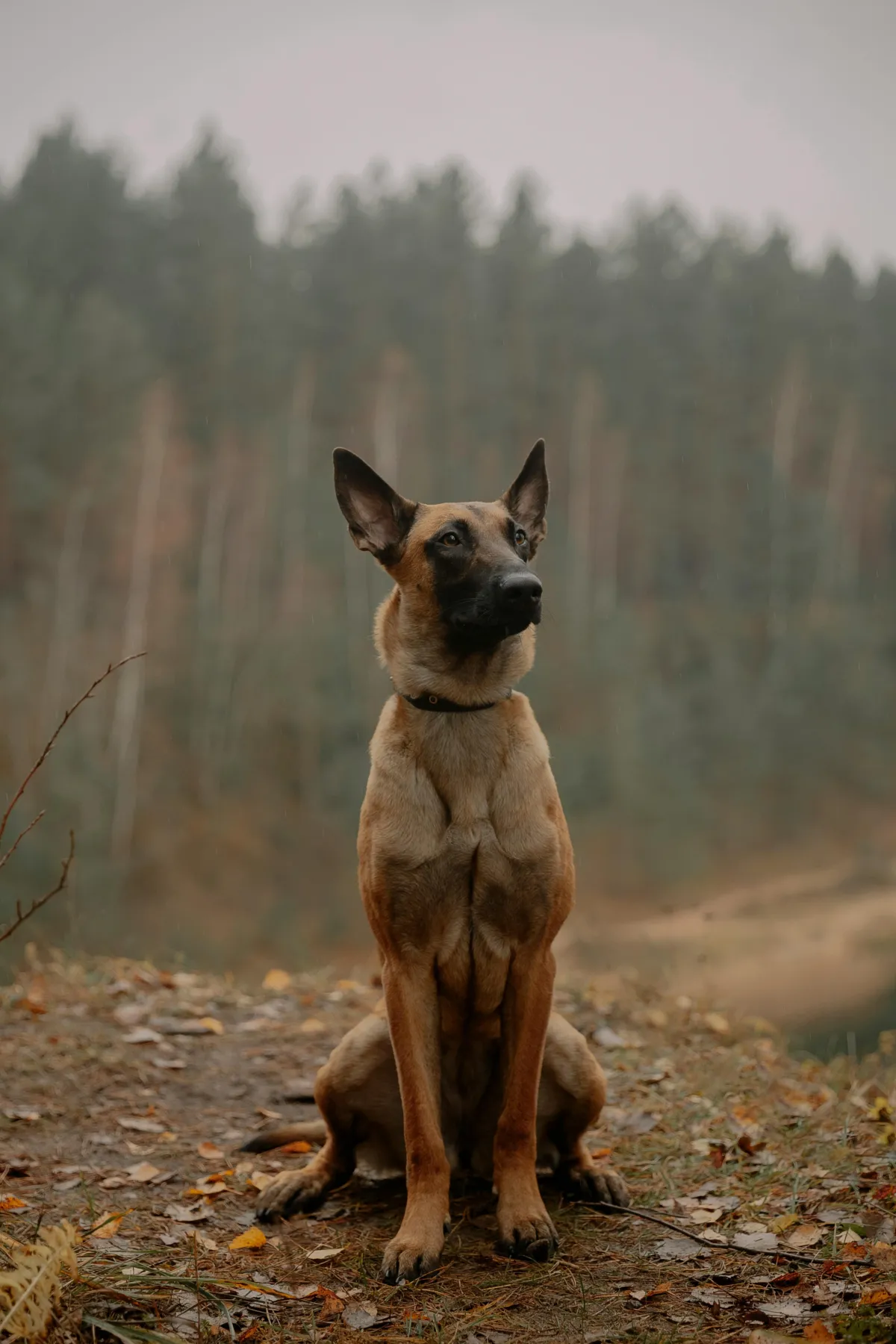
Deliver Better Tools: Innovative, accessible, and effective training plans designed to help you and your dog reach new heights.
Build a Thriving Community: A connected space for Handlers to share, learn, and grow together.
Unleash Potential: Push boundaries, set new standards, and achieve greatness through structured training and support.
Ready to Join the Movement?
At Dog Merickel, we don’t just train dogs—we create partnerships rooted in trust, communication, and excellence.
Explore our programs, connect with our Community, and take the next step in your HRD journey.
Our Promise
Our promise? To bring you sharp tools, smart strategies, and a Community that’s got your back. We work to transform Handlers and their dogs into unstoppable teams.
The Handler's Journal Blog

“Okay. So Now This Is Happening.”
“Okay. So Now This Is Happening.”
Why Present-Moment Discipline May Be a Missing Skill in Dog Handling Mastery

Some ideas sound philosophical when you first hear them.
Interesting, maybe even meaningful—but easy to set aside as something that belongs in a book, a meditation class, or a conversation that doesn’t quite apply to the work we do with dogs.
This was one of those ideas.
At a recent meeting of The Society For Dogs—our weekly ThinkTank where we ask good questions and sit with ideas that don’t always resolve quickly—a colleague shared a simple practice:
“Okay. So now this is happening.”
It landed like a gift.
Not because it was clever.
Not because it was poetic.
But because it felt immediately usable.
The more I’ve sat with it, the more convinced I’ve become that this isn’t a soft idea at all. For dog handlers, this may be a practical discipline—one that supports excellence, judgment, and mastery more than we often realize.
So first: thank you to the colleague who shared it. This one is going to stick.
From Philosophy to Practice
There’s a misconception that staying in the moment means you’re not looking ahead. That you’re unfocused. Passive. Maybe even drifting a little too close to “woo woo.”
The caricature usually goes something like this: if you’re present, you must not care about outcomes. You’re floating. You’re not ambitious. You’re not driven.
I don’t buy that.
In fact, I’m starting to wonder if the opposite is true.
What if staying in the moment—really staying there—isn’t a retreat from excellence, but a requirement for it?
What if the ability to say “okay, so now this is happening” is not philosophical softness, but a form of professional rigor?
The Comfort of Goals (and Their Quiet Risk)
Let’s be honest: goal-setting feels good.
Write the goal.
Break it into sub-goals.
Check the boxes.
I love checking things off a list. Truly. There’s something deeply satisfying about visible progress.
But here’s the uncomfortable question:
What if our attachment to the plan—the checklist, the timeline, the structure—sometimes holds us back?
What if we keep executing a plan simply because it exists, even when the environment has changed, the dog is giving us new information, or the conditions no longer match the assumptions that built the plan in the first place?
That’s not discipline.
That’s rigidity.
And in dog work—especially applied detection work—rigidity is rarely rewarded.
What This Sentence Is Actually Doing
The phrase “okay, so now this is happening” may sound casual, but it reflects a well-established psychological and contemplative skill: present-moment awareness.
In modern psychology, this is often described as the ability to intentionally attend to what is happening right now, without immediately judging it, resisting it, or rushing to change it.
In contemplative traditions—particularly Buddhism—this practice is foundational. The emphasis is not on passivity, but on clear seeing. When we stop arguing with reality internally, we free up cognitive and emotional resources to respond more skillfully.
Research supports this. Studies on mindfulness and attention consistently show that present-moment awareness improves attention control, reduces mind-wandering, and supports more deliberate decision-making under pressure. In other words, it helps people respond rather than react.
That matters.
Especially in work where timing, interpretation, and judgment are everything.
Acceptance Is Not Resignation
One of the most important clarifications here is this: acceptance does not mean giving up.
Psychological research on acceptance makes this explicit. Acceptance is not resignation, complacency, or lack of ambition. It is the willingness to acknowledge reality as it is, without emotional distortion, so that thinking remains clear and flexible.
Saying “okay, so now this is happening” does not mean:
“I don’t care about the outcome.”
“This doesn’t matter.”
“I’ll just let things unfold however they do.”
It means: “Let me see what’s actually happening before I decide what to do next.”
That’s an active move.
And it’s a disciplined one.
Presence Is Precision, Not Passivity
In dog handling, presence often gets misunderstood as hesitation.
But presence, done well, is not slow—it’s precise.
When we’re attached to outcomes, plans, or internal narratives, we tend to:
force clarity too soon
interpret behavior to match expectations
rush decisions because uncertainty feels uncomfortable
defend interpretations instead of revisiting them
Presence interrupts that process.
It creates a brief but powerful pause where observation can happen before interpretation.
This idea appears clearly in Stoicism, particularly in the distinction between events and our judgments about them. As Epictetus famously noted, we are often disturbed not by what happens, but by the meaning we rush to assign to it.
Handlers do this all the time—usually without realizing it.
Presence slows the rush.
Why This Fits Dog Handling So Well
Dog handling lives at the intersection of:
intention and feedback
planning and adaptation
confidence and humility
Dogs do not respond to our expectations.
They respond to contingencies.
When we are present, we are more likely to notice:
subtle behavior changes
shifts in environmental influence
timing mismatches
moments where support is still being sought
Presence helps us see behavior before we label it.
That’s not philosophical—it’s functional.
Responsiveness vs. Reactivity
Another way to frame this is the difference between reactivity and responsiveness.
Reactivity is fast, emotional, and often narrative-driven.
Responsiveness is deliberate, contextual, and informed.
The practice of saying “okay, so now this is happening” creates the conditions for responsiveness.
This idea also appears in Taoism, particularly in the concept of wu wei. Often mistranslated as “non-action,” wu wei is better understood as action that fits the moment—action that aligns with conditions rather than fighting them.
For handlers, this looks like:
adjusting strategy without ego
pausing instead of pushing when information is incomplete
allowing behavior to develop before naming it
changing course without interpreting it as failure
That’s not indecision.
That’s adaptive intelligence.
Excellence Is Not Perfect Execution
We often talk about mastery as flawless execution of a plan.
But in complex, dynamic environments, mastery looks different.
True mastery is the ability to:
notice change early
update interpretations quickly
adjust behavior proportionately
remain steady under uncertainty
A handler who can say “okay, so now this is happening” is not abandoning goals. They are protecting them—by staying aligned with reality instead of overriding it.
Presence doesn’t replace ambition.
It refines it.
It keeps us from mistaking motion for progress.
Why This Matters in Applied Work
In applied detection work—especially in archaeological contexts—our responsibility is not to be right. It’s to be accurate.
Attachment erodes accuracy when it:
narrows what we’re willing to see
accelerates decisions prematurely
reinforces preferred narratives
Presence supports:
cleaner interpretation
transparent reasoning
defensible decisions
trust with archaeologists, agencies, and communities
It also strengthens trust with the dog. When we are present, we are more likely to meet the dog where they actually are—not where we wish they were.
This Is a Trainable Skill
One of the most important things research makes clear is that present-moment awareness is not a personality trait. It’s a trainable cognitive skill.
Just like:
timing
observation
pacing
search strategy
The more you practice it, the easier it becomes to use—especially under pressure.
This is not something reserved for quiet moments after the work is done. It’s something that can be practiced in the field, in training, and in decision-making conversations.
A Simple Practice for Handlers
When something shifts—behavior, environment, outcome—pause and internally say:
Okay. So now this is happening.
Then ask:
What’s actually true right now?
What assumptions am I carrying forward?
What response fits this moment—not the plan I made earlier?
This isn’t about lowering standards.
It’s about raising accuracy.
Why I’m Keeping This One
I don’t think this sentence matters because it sounds wise.
I think it matters because it works.
It interrupts attachment without diminishing commitment.
It creates clarity without urgency.
It supports judgment without ego.
For dog handlers working in complex, uncertain environments, that’s not optional—it’s foundational.
That feels like mastery to me.
The kind built slowly, through attention, humility, and a willingness to meet the work as it actually unfolds.
Go be great. And if you need a thought partner along the way, I’m here.
References & Further Reading
Buddhism – Foundations of mindfulness and present-moment awareness (Satipaṭṭhāna)
Stoicism – Distinction between events and interpretation
Epictetus – Enchiridion
Taoism – Tao Te Ching, concept of wu wei
Brown, K. W., & Ryan, R. M. (2003). The benefits of being present: Mindfulness and its role in psychological well-being
Kahneman, D. (2011). Thinking, Fast and Slow
Sapolsky, R. (2017). Behave

Frequently Asked Questions
GENERAL QUESTIONS
What is Dog Merickel?
Dog Merickel is a science-driven platform dedicated to advancing detection dog training through expert guidance, innovative tools, and a strong Community of Handlers.
Who is Dog Merickel for?
We support detection dog Handlers at all levels—whether you’re just starting out or refining advanced skills in Human Remains Detection (HRD) or Archaeology Human Remains Detection (AHRD).
What makes Dog Merickel different?
We combine cutting-edge science, structured training strategies, and a supportive online Community to ensure you and your dog reach the highest level of success.
The Society For Dogs
What is The Society For Dogs?
The Society For Dogs is our exclusive membership-based Community where Handlers can connect, learn, and grow together. We host weekly Coffee Chats, provide structured training discussions, and offer expert insights.
How do I join The Society For Dogs?
You can become a member by signing up on our website. Elite Memberships are currently $25 per month, but the price will increase soon!
What do I get as a member?
Access to our private online Community
Weekly live training discussions via Zoom
Structured training support and expert insights
Exclusive training resources and tools
Training and Courses
What is OdorQuest?
OdorQuest is our structured training program designed to take Handlers through progressive, science-backed detection training, helping teams build strong skills from foundational to advanced levels.
Can I buy training plans without joining The Society For Dogs?
Yes! We offer one-time training plans like Odor Origins that you can purchase individually. However, joining The Society gives you ongoing support, deeper insights, and access to live discussions.
Business & Logistics
Is Dog Merickel a nonprofit?
We are in the process of setting up a 501(c)(3) nonprofit called the Detection Dog Foundation, which will serve as the fundraising arm for scholarships and educational opportunities.
Do you offer in-person training?
We don’t provide hands-on field training, but we do guide Handlers in preparing for it. We also share insights on where to find the best field trainers and workshops.
Can I teach a course through Dog Merickel?
Yes! Our upcoming OdorQuest Academy will allow experienced Handlers to create and teach virtual classes, earning revenue while contributing to the growth of the detection dog Community.
Get in touch with us
Got questions? Fired up about training? Just want to talk dogs? We’re here for it.
At Dog Merickel, we don’t do cookie-cutter solutions—we craft strategies that work for YOU and your detection dog. Whether you're curious about The Society For Dogs, need a solid training plan, or just want to chat about the latest science in detection training, we’re all ears (and so are our dogs).
Email: [email protected]
- Monday - Friday, 8:00 am - 5:00 pm
Join the Conversation: The real magic happens inside The Society For Dogs—grab your spot here!
Drop us a message, and let’s make things happen.
Follow Us
Follow Us
Every sniff has a purpose. Every step has a strategy. Dog Merickel – Where Handlers and dogs crush goals together.
Services
More
© Copyright 2026 Dog Merickel. All rights reserved.